Trip.com
Promoting Mount Hua Travel to Korean Audiences Across Seoul Station, Gangnam, and Apgujeong
Seoul · South Korea- Client
- Trip.com China
- Media
- Outdoor DOOH + Subway Digital
- Location
- Seoul, South Korea
- Campaign Period
- OCT 27 – NOV 2, 2026
- Campaign Objective
- Promote travel to Mount Hua (Huashan), China, among Korean consumers interested in visiting China.
Korea is one of Asia’s most active outbound travel markets, and travel to China has gained new momentum since China introduced visa-free entry for Korean travelers in late 2024. For travel brands, this creates a clear opportunity, but also a challenge: inspiring travel to a specific destination requires more than online search ads. It requires making the destination visible in people’s daily lives. That is where Korea OOH plays a powerful role. In Seoul, where millions of people commute through subway stations and dense commercial districts every day, Seoul OOH puts destination imagery in front of potential travelers repeatedly, turning a distant place into a trip worth planning.
Located in Shaanxi Province near the ancient city of Xi’an, Mount Hua is one of China’s Five Great Mountains and is renowned for its dramatic granite peaks, cliffside paths, and sweeping views above the clouds. Its famous plank walk, built into a sheer cliff face, has made it one of the most talked-about adventure destinations in Asia. For Korean audiences, the name also carries cultural familiarity through martial arts novels and dramas, where Huashan appears as a legendary setting. Combined with Xi’an’s rich history and high-speed rail access, Mount Hua offers Korean travelers a destination that blends nature, adventure, and culture.
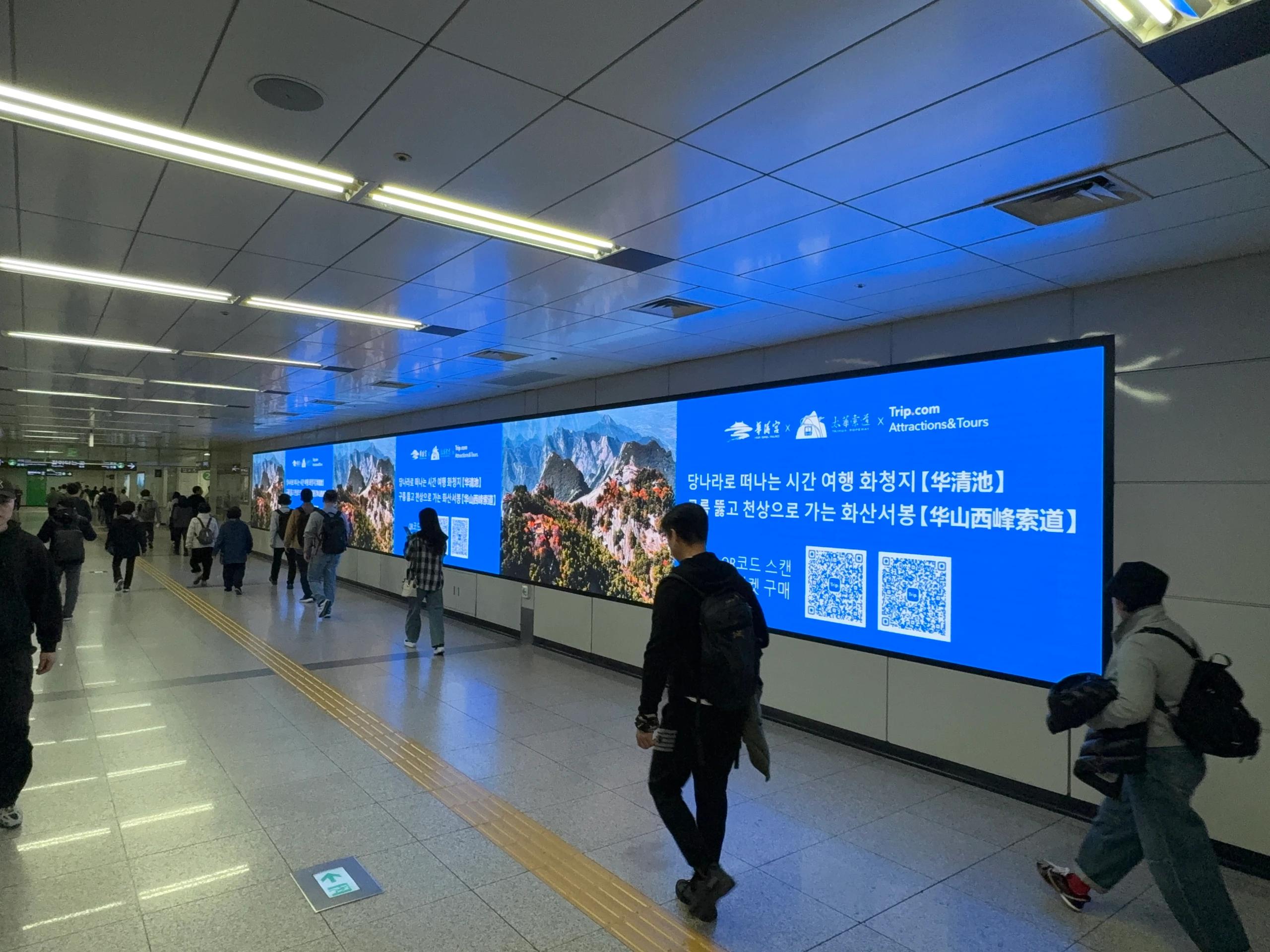
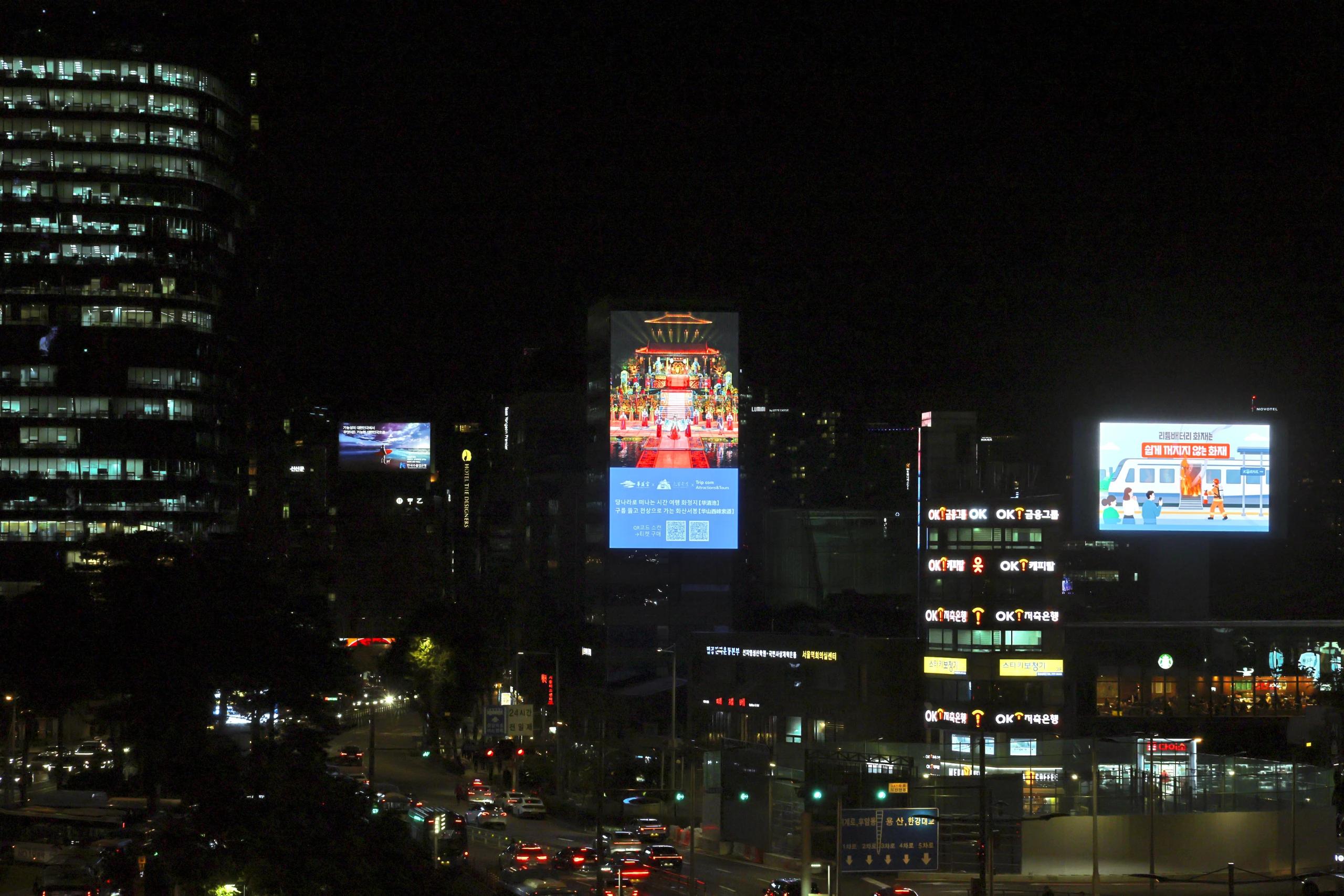
Trip.com’s China team partnered with Bloomingterra to bring Mount Hua to Korean audiences from October 27 to November 2, 2026. The campaign was originally planned as a performance-style event at Yeouido Hangang Park, but commercial events in Seoul’s Hangang parks are subject to strict permit requirements and usage regulations. Rather than scaling down the idea, Bloomingterra pivoted the campaign into Korea outdoor advertising, a format that could deliver broader reach across the city within the same timeline. The final plan combined outdoor digital screens and subway digital media in three districts where Korean locals gather in large numbers.
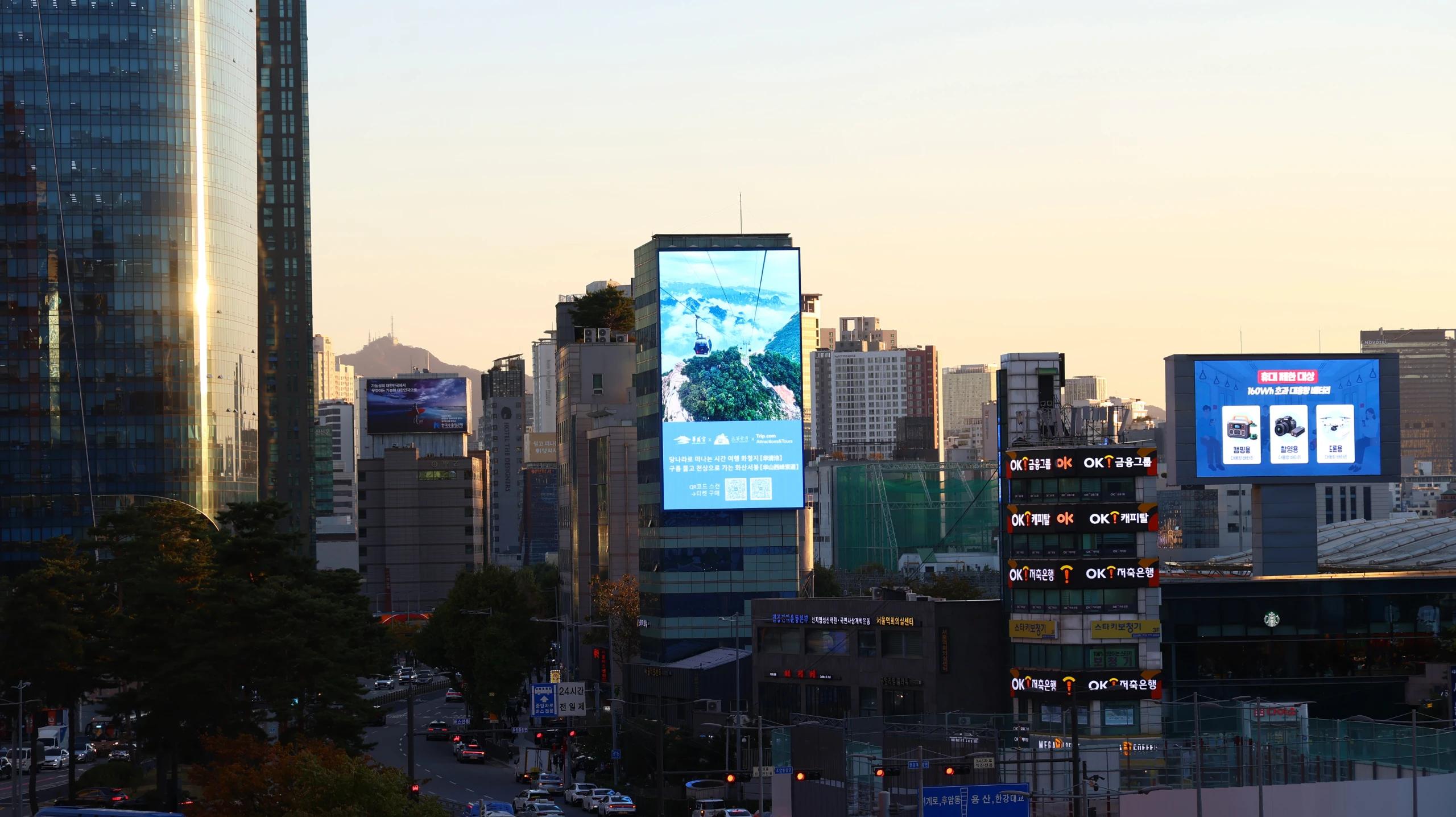
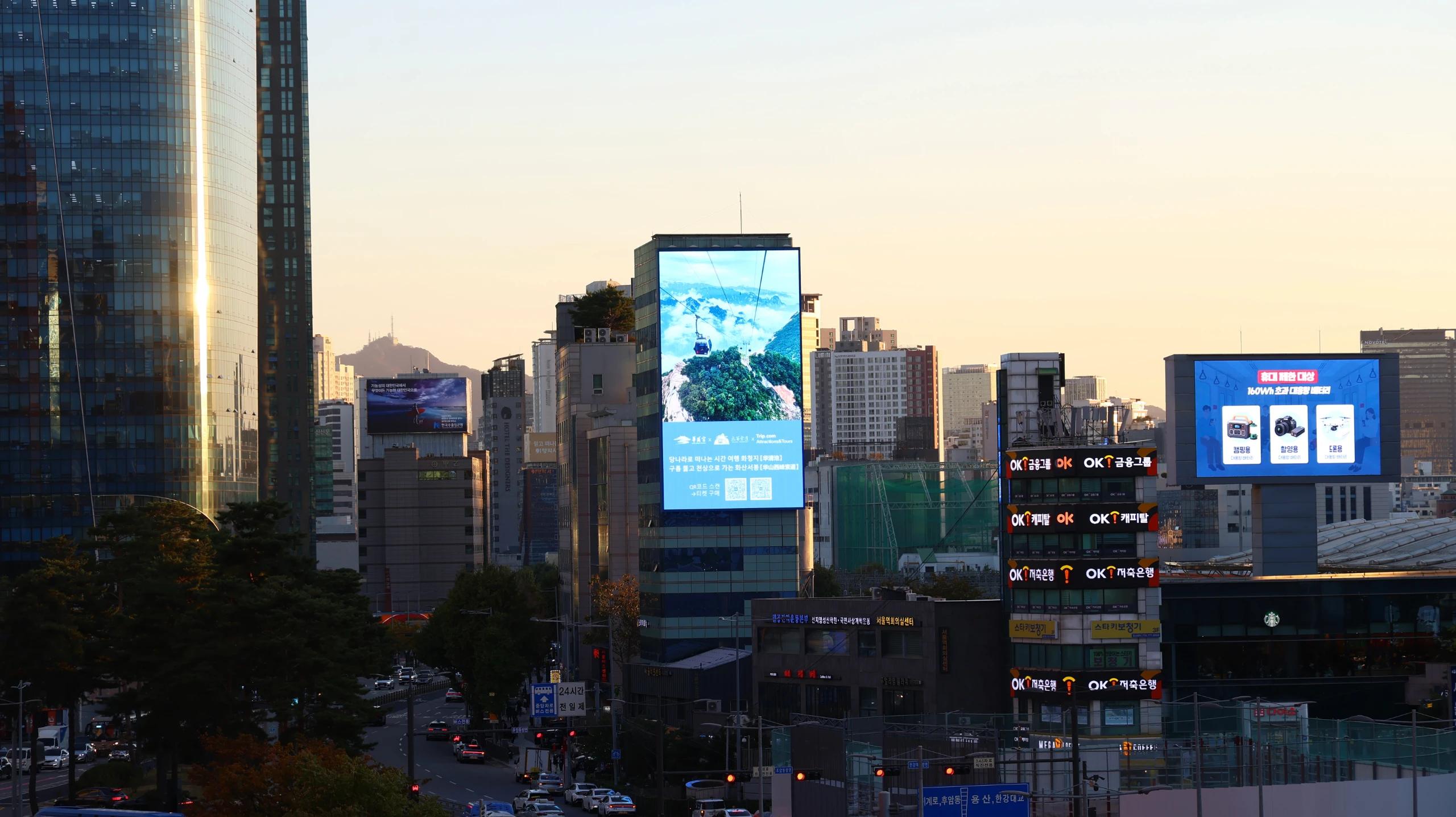
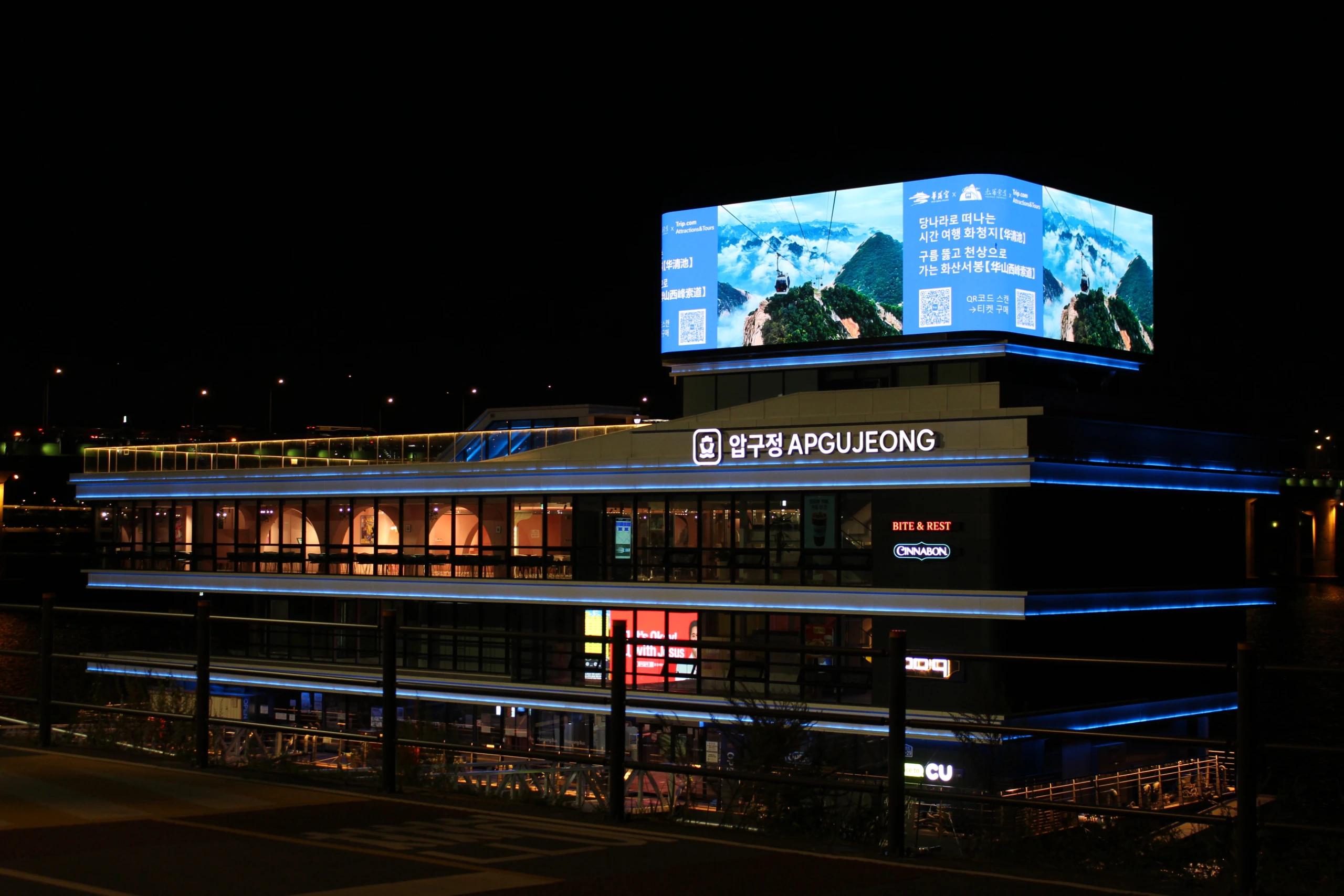
Each location reached a different part of Seoul’s local audience. Seoul Station, the city’s main KTX rail hub and the departure point for the airport railroad to Incheon International Airport, connects with people who are already in a travel mindset. Gangnam, one of Seoul’s largest business and commercial districts, reaches office workers and young professionals with the income and interest to plan overseas trips. Apgujeong, known for luxury retail and an affluent residential base, adds high-spending consumers who seek premium travel experiences. Together, these three areas formed a Seoul OOH footprint focused on locals rather than tourists, exactly the audience a China travel campaign needed.
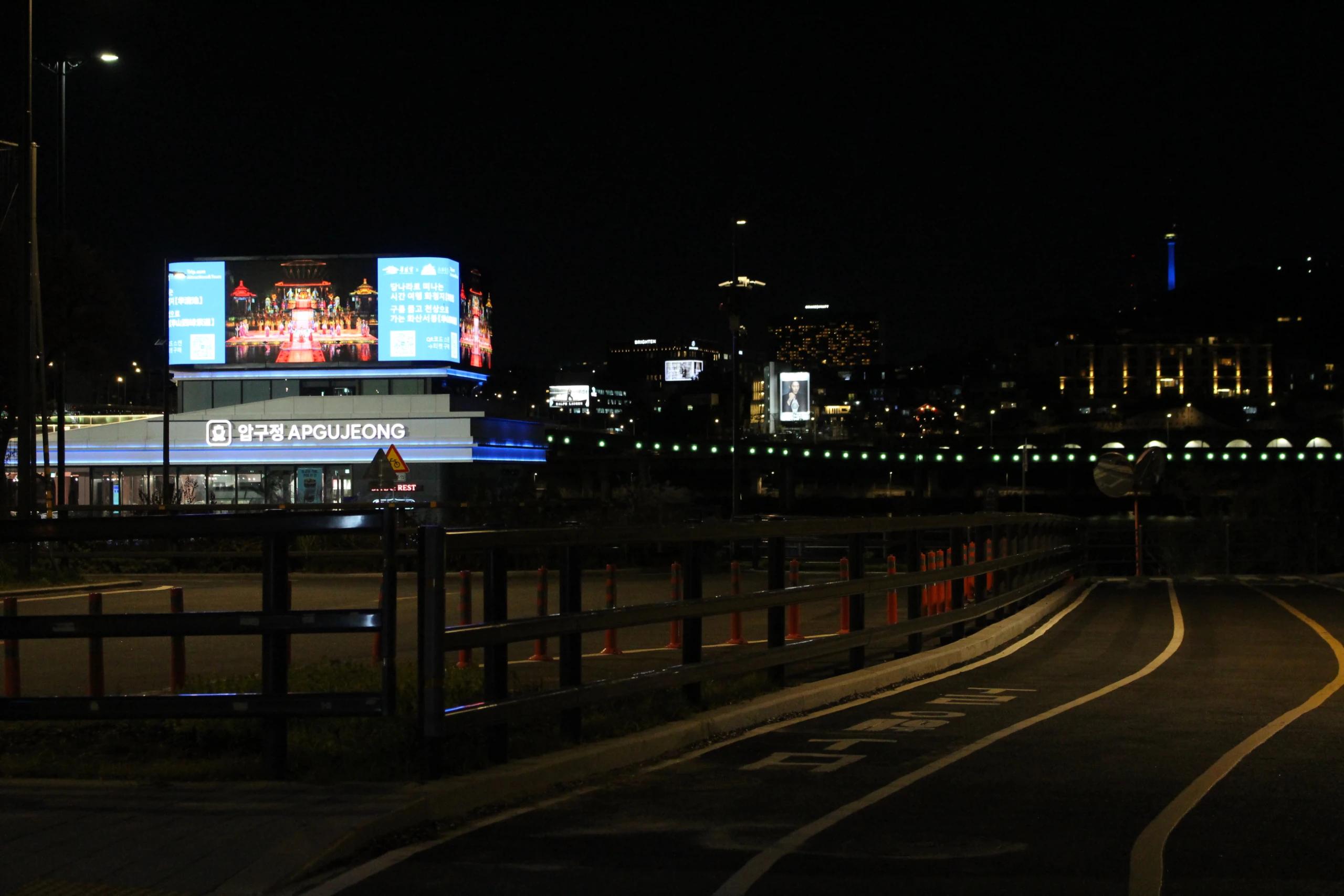
The campaign used two complementary formats. Outdoor digital screens delivered large-format, high-visibility imagery of Mount Hua’s peaks in busy streetscapes, capturing attention through scale. Subway digital media, meanwhile, reached commuters in stations and corridors they pass through every day, building frequency over the seven-day flight. Seoul’s subway is one of the most heavily used metro systems in the world, and subway advertising in Korea offers some of the most consistent daily exposure available to brands. Pairing both formats allowed Trip.com to capture attention above ground and reinforce the message underground.
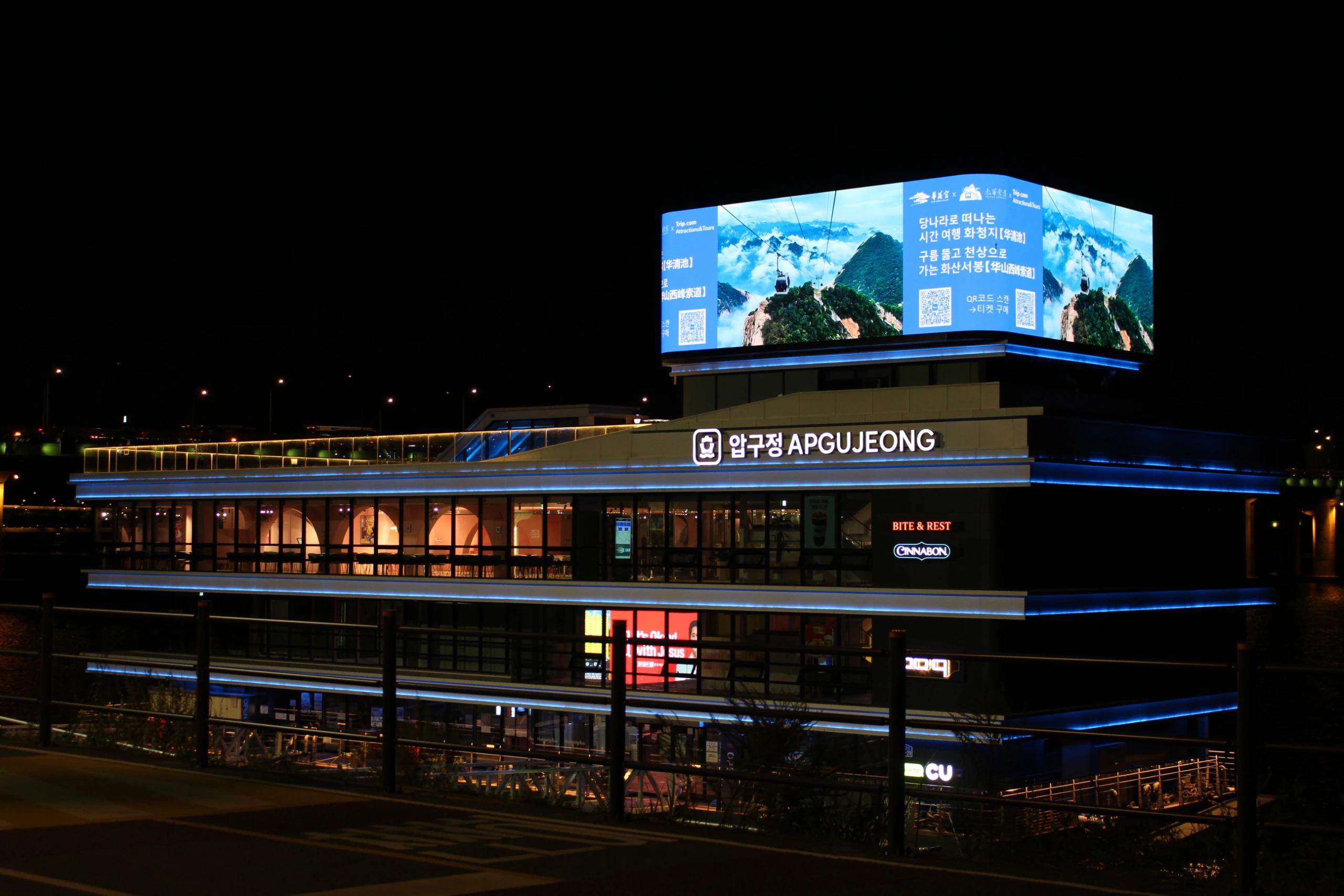
The shift from a Hangang Park event to an OOH campaign highlights a reality many international brands face in Korea. Korea outdoor advertising and public space usage are governed by detailed regulations, and requirements vary depending on location, format, and the type of activity. Ideas that work easily in other markets may need a different execution here. Understanding these rules early, and having alternative formats ready, allows a campaign to move forward on schedule without losing its core goal. In this case, the pivot meant Mount Hua reached a wider audience across multiple districts, rather than visitors to a single park on a single day.
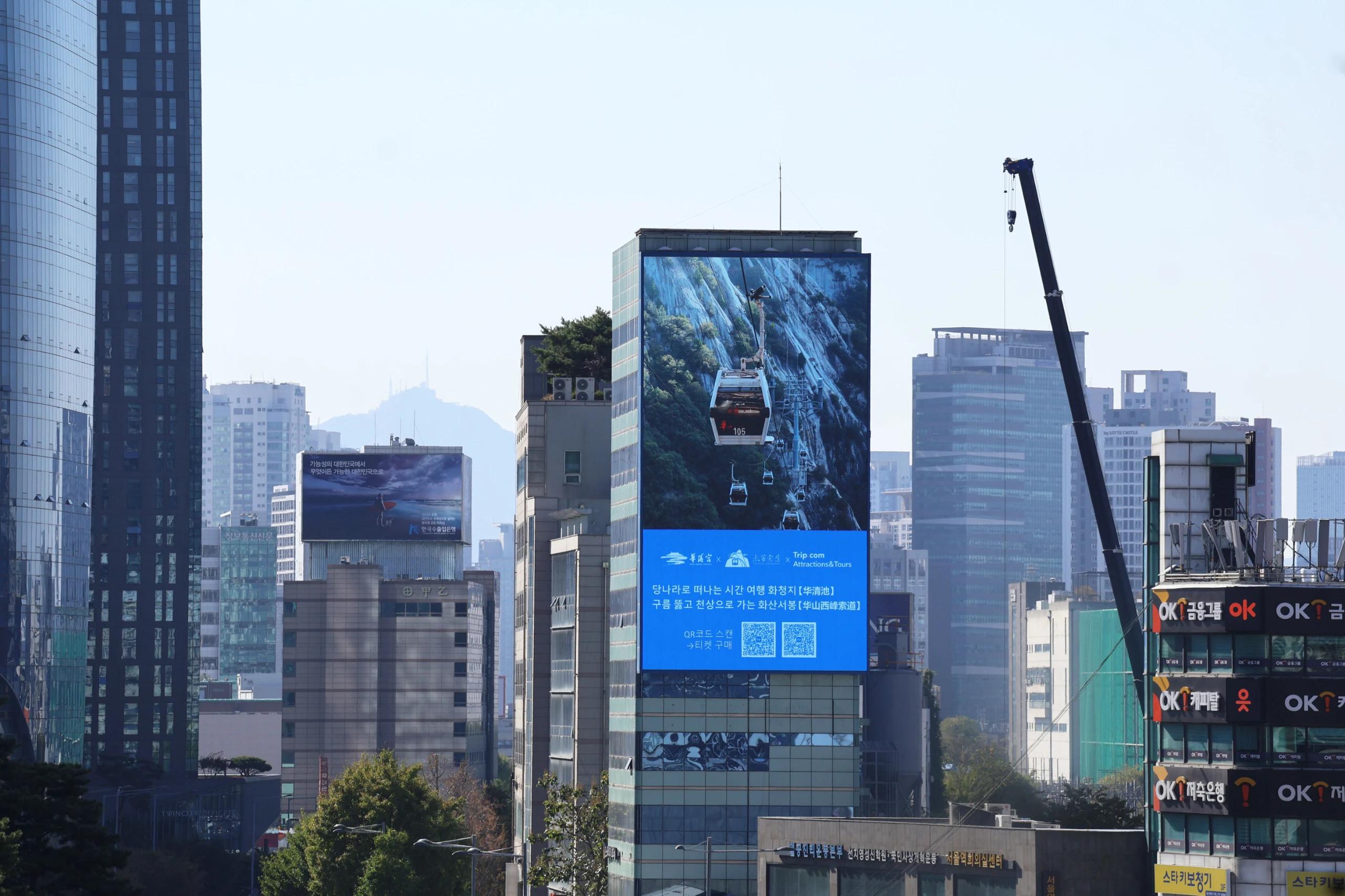
The Trip.com campaign shows how destination marketing can use Korea OOH to inspire travel among local audiences. By selecting districts tied to travel, business, and affluent consumers, and combining outdoor digital with subway media, the campaign kept Mount Hua visible throughout Korean commuters’ daily routines. The same approach applies to tourism boards, airlines, hotels, and travel platforms looking to reach Korean travelers. For international brands planning Seoul OOH or Korea outdoor advertising, Bloomingterra helps navigate local regulations, adapt plans when needed, and select the right media mix to reach the right audience.